The Costco Organic Food Guide 2026: How to Eat Organic Without Paying Whole Foods Prices

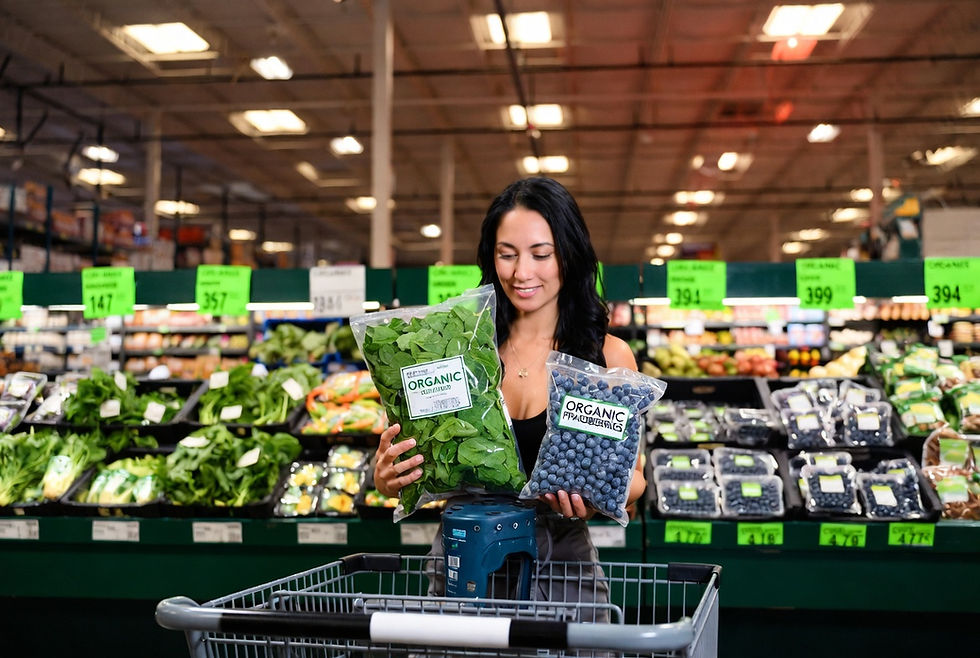
Costco is one of the largest organic food distributors in the United States.
That fact lands differently depending on when you first encounter it. Most people who hear it for the first time associate Costco with bulk paper towels, rotisserie chicken, and the $1.50 hot dog — not with the organic food category that the Organic Trade Association reports crossed the $70 billion mark in U.S. sales in recent years, at record levels even amid inflationary pressure.
The reality: Costco has been quietly building one of the most commercially significant organic food programs in American retail for years. The organic category at Costco generates savings that transform the economics of eating organic for households that previously found Whole Foods, Sprouts, and specialty grocery organic pricing financially unsustainable for regular shopping.
Frozen organic blueberries: under $8 for 4 pounds at Costco versus $5 to $6 for a single pound at a specialty grocer. Organic eggs: $7.99 for a full flat at Costco versus $9 to $14 for a dozen at Whole Foods. Organic baby spinach: 30 to 40 percent below Whole Foods pricing per pound. Organic ground beef: one of the best prices available in any retail channel for organic 85/15.
This is the complete guide to Costco's organic food program in 2026 — how to use it strategically, which specific products consistently beat competing channels on price, and the practical framework that helps members prioritize which organic items are worth buying at any store versus which conventional items are low enough risk to skip the organic premium entirely.
The Strategic Foundation: The Dirty Dozen and Clean Fifteen
Before diving into specific Costco organic products, the most commercially useful framework for deciding which organic items are worth prioritizing is the Environmental Working Group's annual Dirty Dozen and Clean Fifteen lists.
The Dirty Dozen identifies the produce items with the highest pesticide residue levels in conventional farming — the items where the organic premium is most clearly justified by the reduction in pesticide exposure. The Clean Fifteen identifies the produce items with naturally low pesticide residue even in conventional farming — the items where the organic premium is least necessary from a pesticide reduction standpoint.
One member who shops primarily at Costco for her organic purchases explained her prioritization framework: she prioritizes buying organic for corn, sugar, beans, oats, and wheat — conventional versions of these crops consistently show high glyphosate presence.
She follows the EWG recommendations for the Dirty Dozen and Clean Fifteen — strawberries, blueberries, and apples always seem to be on the dirty dozen list, so she buys
organic produce for those fruits.
The practical application for Costco shoppers: prioritize organic purchases at Costco for items that appear consistently on the Dirty Dozen list — strawberries, blueberries, spinach, kale, peaches, pears, nectarines, apples, bell peppers, grapes, cherries, and tomatoes.
These are the categories where the organic certification delivers the most meaningful difference in pesticide exposure reduction, and where Costco's pricing on organic versions generates the most compelling savings versus Whole Foods or specialty grocery alternatives.
For produce that consistently appears on the Clean Fifteen — avocados, sweet corn, pineapple, onions, papaya, sweet peas, asparagus, honeydew melon, kiwi, cabbage, mushrooms, mangoes, watermelon, sweet potatoes, and carrots — conventional versions at Costco represent excellent value without the organic premium.
The Frozen Organic Produce Section: Where Costco's Organic Savings Are Most Dramatic
The frozen organic produce section at Costco is where the intersection of price, convenience, and waste elimination creates the most compelling member value in the entire organic category.
Organic Frozen Blueberries — 4 pounds, under $8
The frozen organic blueberry comparison is the single most striking price differential in
Costco's organic program. Under $8 for 4 pounds of frozen organic blueberries at Costco. A single pound of fresh organic blueberries at Whole Foods typically runs $5 to $7 when not on sale. The Costco frozen format delivers eight times the volume at a fraction of the per-pound cost — and frozen organic blueberries are, for most applications (smoothies, oatmeal, baking, yogurt bowls), superior to fresh blueberries that have traveled thousands of miles and been refrigerated for days or weeks.
Members consistently praise both the value and the quality: "We live on their frozen organic blueberries. I think they're less than $8 for 4 pounds! They're huge berries, and so delicious and sweet."
Organic Frozen Strawberries
Strawberries appear near the top of the EWG Dirty Dozen list consistently — making organic the meaningful choice for households that consume strawberries regularly. Frozen organic strawberries at Costco deliver the organic certification at a per-pound price dramatically below what Whole Foods charges for conventional fresh strawberries during much of the year.
The frozen format eliminates the three-day freshness window that makes fresh organic strawberries an expensive proposition — you buy what you need, use it, and the remainder stays frozen at full quality until you need more.
Kirkland Signature Organic Broccoli Florets (Frozen)
Perfect for a quick vegetable side dish. Members roast them straight from the freezer — no defrosting needed — and they turn out delicious every time. The convenience dimension is the key selling point: frozen organic broccoli florets require no washing, no cutting, no prep time beyond opening the bag. They go directly from freezer to sheet pan for roasting, directly into pasta water for blanching, or directly into a stir-fry over high heat.
The organic certification matters for broccoli — a cruciferous vegetable that appears on EWG watch lists for pesticide residue — and the Costco frozen format delivers it at warehouse pricing.
Organic Frozen Mango
When they have the frozen mango I also go through tons — a member comment that communicates the product's seasonal excitement when it arrives. Frozen organic mango at Costco delivers tropical fruit at a price that makes it a routine smoothie and breakfast bowl ingredient rather than an occasional luxury.
The Fresh Organic Produce Winners
Organic Baby Spinach
The per-pound price for organic baby spinach at Costco is typically 30 to 40 percent below Whole Foods pricing for equivalent quality. Spinach appears consistently on EWG Dirty Dozen lists — making organic the meaningful choice for frequent spinach consumers. The large format at Costco is appropriate for households that use spinach daily: smoothies, salads, sautéed vegetable sides, eggs, and pasta all benefit from spinach, and daily use works through the Costco quantity before the three-to-five-day wilting window closes.
For households that use spinach occasionally rather than daily, the same price advantage applies in the frozen organic spinach format — which has an indefinite shelf life and zero waste risk.
Organic Mushrooms — Large Tub
I love the umami flavor of mushrooms and always add extra to any recipe that calls for them.
I buy my organic mushrooms at Costco — they're affordable and come in large tubs. The only downside? They're not pre-sliced, so there's an extra prep step.
Mushrooms are on EWG watch lists for pesticide residue, making organic meaningful for frequent mushroom consumers. The Costco tub format delivers significant quantity at institutional pricing. The pre-slicing trade-off — they require manual slicing rather than arriving ready to use — is the only meaningful limitation, and the five minutes of prep time is easily justified by the price and quality.
Organic Avocado Mash Single-Serve Cups
Unlike guacamole, they don't contain onions, garlic, or tomatoes — just plain mashed avocado with a little salt and pepper. It's perfect for avocado toast, which I make for breakfast a few times a week. The single-serve cup format eliminates the primary avocado waste problem: opening an avocado, using half, and watching the other half oxidize despite every browning-prevention technique available. The cup format provides exactly the amount needed, in an organic and ready-to-use format, without the oxidation issue.
The Organic Protein Category: Meat, Poultry and Eggs
Organic Eggs — $7.99 for a Flat
Costco has one of the best organic food brands when it comes to eggs. Their organic eggs are only $7.99 for a whole flat. This is a much lower price than you will find at any other grocery store.
The organic egg pricing at Costco is the most immediate and most dramatic organic price comparison available in any product category. A dozen organic eggs at Whole Foods or a natural grocery store routinely costs $7 to $14 depending on location and certification level. Costco's flat — which contains 24 eggs — at $7.99 represents a cost of approximately $0.33 per egg compared to $0.58 to $1.17 per egg at specialty organic retail. For a household that consumes a dozen eggs or more per week, this single product generates meaningful annual savings.
Kirkland Organic Ground Beef
Raised without antibiotics and no additional growth hormones, this 85/15 ground beef isn't likely to be available at this price anywhere else so stock up if you've got the freezer space.
Organic ground beef at specialty grocery routinely commands $8 to $12 per pound. The Costco organic ground beef pricing — available in the large format that freezes well in meal-sized portions — brings it to a more accessible price point that makes organic ground beef a weekly rather than occasional household purchase.
Organic Chicken — Breasts, Thighs, Tenders
Costco is a go-to for organic chicken, offering a variety of cuts including organic chicken breasts, thighs, and tenders. Good quality, juicy chicken breasts are hard to come by, much less from a 100% organic, GMO-free company committed to sustainable farming practices.
The key practical note from a registered dietitian member: organic chicken products need to be used a few days sooner than conventional ones — so always check dates. This is the honest limitation of organic chicken: faster quality degradation means that the larger Costco format is most appropriate for households that cook with chicken multiple times per week or that freeze a portion immediately upon purchase.
The Organic Pantry Category at Costco
Dave's Killer Bread
Ever since I discovered Dave's Killer Bread, it's been my go-to bread. Unlike most whole grain bread, it's delicious — moist, hearty, and packed with seeds, making it a high-protein choice. In fact, a slice contains as much protein as an egg. Produced in a nut-free facility.
Dave's Killer Bread at specialty grocery typically runs $6 to $8 per loaf. Costco's multi-pack format delivers meaningfully better per-loaf pricing for households that go through bread at a regular rate.
Kirkland Signature Organic Chicken Stock — 6-Pack
One of the most consistently recommended Costco organic pantry purchases. Chicken stock is a pantry essential for soups, stews, braises, rice, and sauces — and the organic certification, combined with Kirkland's quality standard, delivers a genuinely premium product at institutional pricing. The 6-pack format works for any household that cooks with broth regularly.
Kirkland Organic Vanilla Almond Milk
Always keeping a case of Kirkland Organic Vanilla Almond Milk in the pantry for daily coffee use instead of heavy cream — it's delicious. Plus, it has a long shelf life, so I don't have to worry about using it up quickly. Tetra-pack almond milk has an extended shelf life before opening — making the Costco multi-pack a practical choice rather than a waste risk.
Acetum Organic Apple Cider Vinegar with the Mother — 128 oz
Costco sells a 128-ounce container of organic apple cider vinegar with the "mother" — the natural and safe-to-consume bacteria that forms during fermentation. Most commercial ACV strips the mother out; this Costco format preserves it at a price per ounce dramatically below specialty health food store alternatives. The 128-ounce format is appropriate for households that use ACV in salad dressings, cooking, and the health applications that have driven ACV's popularity in the wellness community.
LesserEvil Organic Popcorn — 28-Count, $18.99
A big hit with Costco members: "The Lesser Evil popcorn is organic and is so good. It makes a great, healthier snack." What sets it apart is the buttery-flavored coconut oil (no vegetable or palm oil) and Himalayan sea salt. At $18.99 for 28 bags, the per-bag price significantly undercuts what individual bags of LesserEvil cost at specialty grocery or Amazon. For the health-conscious snacker who has discovered LesserEvil and wants to keep it as a regular household snack, the Costco format is the most commercially rational purchase.
Kirkland Signature USDA Organic Multivitamin — 80 count, $22.99
Costco shoppers love the Kirkland Signature USDA Organic Multivitamin at $22.99 for 80. At comparable organic multivitamins at Whole Foods or specialty vitamin retailers, 80 count regularly costs $30 to $45. The institutional pricing that Costco applies to supplements — the same pricing discipline that makes Kirkland batteries and Kirkland protein bars such strong value plays — extends to the multivitamin category with equivalent effect.
Seeds of Change Organic Quinoa and Brown Rice
When in a rush and not having time to cook brown rice, reaching for Seeds of Change Organic Quinoa and Brown Rice is the solution — just microwave for 90 seconds, and it's ready. Plus, it's seasoned with garlic, making it delicious. The convenience premium of microwaveable organic grain at Costco pricing is one of the strongest value propositions in the organic prepared food category.
The Green Price Tag: Costco's Organic Identification System
Bright green Costco price tags signal that an item is organic. This visual identification system allows members to quickly distinguish organic from conventional across the warehouse's food sections — though the system is not universally implemented at every location and should be verified against the product's actual USDA Organic certification label.
For members building an organic-forward shopping list at Costco, the green tag scan is a useful navigational tool: systematically checking the price tag color in sections you regularly shop identifies organic options you may not have noticed previously.
The Honest Economics: When Organic at Costco Still Costs More
Even at Costco's institutional pricing, organic products cost more than conventional alternatives. This is the structural reality of organic certification — the farming practices, certification costs, and supply chain requirements that produce organic food generate genuine cost differences that are reflected in the price, even at Costco's most aggressive pricing.
The honest framework: organic is worth the premium at Costco for the Dirty Dozen categories (where pesticide reduction is most meaningful), for protein categories where you have concerns about antibiotic use and hormones, and for the processed and packaged organic items where Costco's price already represents dramatic savings versus specialty retail alternatives.
Conventional is perfectly rational at Costco for the Clean Fifteen produce categories, for items where organic certification represents primarily a preference rather than a measurable health or environmental benefit, and for any item where the organic premium at Costco still results in a price that exceeds your household budget for that category.
Eating non-organic fresh produce is still better for you than eating potato chips and snack cakes. Progress is better than perfection — a framework that allows members to prioritize organic purchases strategically while not making perfect the enemy of genuinely good grocery decisions.
At MOJO Sales & Branding, we track every dimension of the Costco member experience — from the organic food program that makes genuinely clean eating economically accessible to the roadshow brands that create the discovery moments that keep members returning to the warehouse every week.
Contact us at 732.433.7873 or Susan@MOJOSalesandBranding.com.
Costco Organic Highlights 2026 — Quick Reference:
Product | Costco Price | Competing Price | Savings |
Organic frozen blueberries | Under $8/4 lbs | $5-7/lb at Whole Foods | 80%+ per pound |
Organic eggs | $7.99/flat (24) | $7-14/dozen | 50-75% per egg |
Organic baby spinach | — | 30-40% below Whole Foods | Significant |
Kirkland Organic Multivitamin | $22.99/80ct | $30-45/80ct specialty | 35-50% |
LesserEvil Organic Popcorn | $18.99/28ct | $3-4 per individual bag | 50%+ per bag |
Organic frozen strawberries | — | Higher than Costco | Meaningful |
Organic ground beef | — | $8-12/lb specialty | Significant |
Dave's Killer Bread | Multi-pack | $6-8/loaf specialty | Per-loaf savings |
#CostcoOrganicFoodGuide2026 #CostcoOrganicFood2026 #CostcoOrganicGroceries2026 #CostcoOrganicSavings #CostcoOrganicProduce #CostcoOrganicVsWholeFoods #CostcoOrganicEggs #CostcoOrganicBlueberries #CostcoOrganicShopping #DirtyDozenCostco #CostcoHealthyFood2026 #CostcoMember #CostcoLife #CostcoInsider #CostcoSavings2026 #CostcoTips #CostcoHacks2026 #MOJOSalesAndBranding #OrganicFoodSavings #CostcoCleanEating


Comments